
With custom T-shirt printing, start by thinking about how the shirts will be used, who will wear them, and what your design needs to show. A detailed, full-color graphic calls for different considerations than a simple mark. The garment should suit the occasion as well as the artwork.
Product photos alone may not answer the practical questions: will the design read clearly at its intended size, will the garment suit its wearers, and can the order fit your schedule? This guide walks through those decisions so you can prepare a clear project plan.
At Joe’s Unique Creations, we print full-color apparel in-house with DTF technology on shop-provided garments. You’ll learn how artwork, garment choice, quantity, and timing shape a project, what to prepare for an order, and how same-day options work for qualifying orders using select in-stock garments. Whether you’re planning one shirt or apparel for a group, the goal is to make informed choices before production.
Key Takeaways
- Start with the purpose of the shirts to narrow down garment, design, and quantity choices.
- See how custom T-shirt printing methods suit different artwork and project needs.
- Use a simple checklist to organize your design, garment direction, size breakdown, and timing.
- Learn what to expect from Joe’s in-house DTF printing for individual and group apparel projects.
Custom T-Shirt Printing Starts With the Project You Want to Make
Custom T-shirt printing adds a chosen design to apparel. Before choosing a shirt or artwork, define what you’re making and how people will use it. A personal keepsake has different priorities from apparel for a team, event, or business.
Consider how often the shirts will be worn and where. Should the design stand out across a room, or feel understated enough for everyday wear? Are you ordering one shirt or collecting sizes for a group? Answering these questions helps narrow the choices without requiring you to know printing terminology.
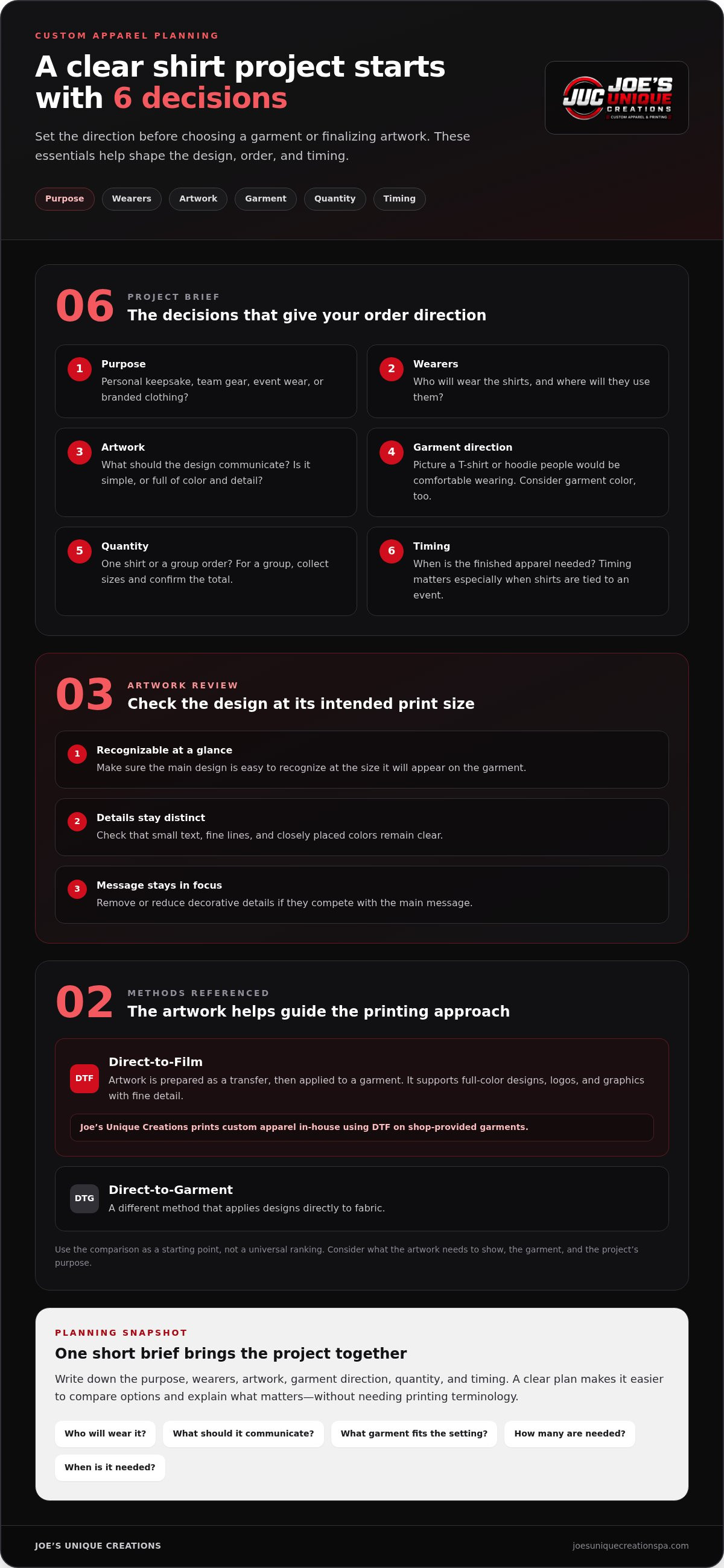
Before you order, decide who will wear the shirts, what the design needs to communicate, and when the finished apparel is needed. These decisions give the project direction and help you explain what matters, whether you’re planning a personal piece or a larger order.
What can custom T-shirt printing help you create?
A custom design can turn a T-shirt or hoodie into personal apparel, team gear, event wear, or branded clothing. The same logo might need to be easy to spot on a team shirt but sit more quietly on everyday apparel. A personal illustration may call for a different balance of color and detail than a simple event name. Let the purpose guide the design’s scale, placement, and visual emphasis.
Quantity affects planning, too. One shirt for yourself is a different task from gathering sizes across a team or group. For a group order, collect the sizes and confirm the total before finalizing the details. For an individual project, focus on the fit and look you want. Both benefit from a clear plan.
Which details should you decide before choosing a shirt?
Start with the wearer and setting. Consider whether the shirt is for regular use, a shared occasion, or work-related visibility. Then look at the artwork: is it mostly text or a simple mark, or does it rely on several colors and fine details? Those characteristics can help guide the printing method. For context, Direct-to-Garment (DTG) printing is another method that applies designs directly to fabric.
Next, picture the garment people would be comfortable wearing. A T-shirt and a hoodie suit different preferences and settings, and garment color affects how the design appears. You don’t need to name a fabric weight or describe a printing process. Note what you like, what the project calls for, and when you need the apparel. Timing is especially important when shirts are tied to an event.
Put the essentials in a short project brief: purpose, wearers, artwork, garment direction, quantity, and timing. With those details ready, it’s easier to compare options and describe what you need without guessing at technical terms.
How Artwork and DTF Printing Shape a Custom T-Shirt
Your design’s colors, lines, and lettering can help guide the printing choice. Direct-to-Film, or DTF, is one method used for custom apparel. DTF printing prepares artwork as a transfer, then applies that transfer to a garment. It supports full-color designs with crisp detail, including artwork that combines several colors or includes smaller graphic elements.
At Joe’s Unique Creations, custom apparel is printed in-house using DTF on shop-provided garments. Clear artwork gives the print a useful starting point. Crowded layouts or hard-to-read text can make a design less effective, so review the artwork at its intended size before placing an order.
What makes artwork easier to print clearly?
Begin with clean, legible artwork. Remove decorative elements if they compete with the main message. Look closely at fine lines and small text, especially if the design needs to be understood quickly or seen from a distance. Text that looks readable on a large screen can feel crowded when reduced to shirt size.
Review the design at roughly the size you expect it to appear on the garment. Check that letters remain distinct and important details don’t disappear into nearby shapes or colors. Follow the artwork instructions provided with your order process for file preparation rather than guessing at technical settings.
When does full-color DTF suit a shirt design?
DTF is a practical option for colorful logos, illustrations, and graphic designs with multiple shades or fine detail. For example, a design with a colored emblem, lettering, and small accent shapes can benefit from a method that supports full-color artwork. The right result still depends on the design and garment, so no print method should be treated as a perfect match for every project.
Other methods handle artwork differently. Direct-to-Garment (DTG) printing, for instance, applies ink directly to fabric, while DTF uses a prepared transfer. When comparing approaches, focus on what the artwork needs to show: a range of colors, crisp edges, small details, or a simpler mark. Joe’s apparel printing uses DTF.
Before sharing your design, check that:
- The main design is easy to recognize at the intended print size.
- Small text, thin lines, and closely placed colors remain clear.
- Decorative details don’t overwhelm the message.
These checks don’t require specialized design knowledge. They help you communicate a clear direction and catch potential issues before production. If your artwork is ready, explore custom apparel printing from Joe’s Unique Creations.
Compare Custom T-Shirt Printing Methods by Design and Use
The right method depends on what your artwork needs to show, which garment it will go on, and the project’s purpose. No single approach suits every shirt. A simple graphic, a multicolor illustration, and an all-over design each raise different production considerations. Use this comparison as a starting point, not a universal ranking.
| Method | How it works | Broad use case |
|---|---|---|
| DTF | Artwork is prepared as a transfer and applied to apparel. | Full-color designs, logos, and graphics with fine detail. |
| Screen printing | Ink is pressed through a screen prepared for each design color. | Bold, simpler artwork and projects with larger quantities. |
| Sublimation | Heat turns printed dye into gas that bonds with suitable material. | Colorful designs on polyester-based items, including some all-over print applications. |
These are broad descriptions. Garment material, design, placement, and intended use all affect which method makes sense. For custom T-shirt printing, compare the look you want with the way each process applies the design. A method that suits a simple mark may not be the same one you’d choose for an image with many colors and small details.
How does DTF compare with screen printing for custom shirts?
DTF uses a prepared transfer and supports full-color artwork and detailed graphics. Screen printing uses a separate screen for each color, so the production approach differs. It’s often associated with simpler designs and larger runs, but the best fit depends on the artwork and project. Joe’s apparel printing uses DTF, including for full-color custom apparel.
A logo made up of a few bold shapes and a detailed illustration with several colors place different demands on a print process. Compare the number of colors, the small elements that need to remain clear, and how the design should sit on the shirt. These details make the comparison more useful than choosing by method name alone.
Where does sublimation fit in custom apparel printing?
Sublimation is a distinct process that uses heat to transfer dye into suitable material. It’s commonly associated with polyester-based items and colorful designs, including some all-over applications. It isn’t the same as DTF, and suitability depends on the item and material. Joe’s offers sublimation for promotional merchandise, while its apparel printing uses DTF.
Compare the garment and artwork together. A T-shirt design may call for a different approach than a printed promotional item. Joe’s sublimated promotional items use a separate process from its DTF apparel printing.
Prepare Your Custom T-Shirt Printing Order With This Checklist
Preparation makes a custom T-shirt printing order easier to explain and organize. You don’t need production expertise. Gather the key details, review the artwork, and share your needed-by date early, especially if the shirts are for a group or event.
A clear order starts with the purpose, artwork, garment preference, size breakdown, and timing. Use this checklist to get those details in order:
- Purpose: Note who will wear the shirts and how they’ll be used, such as for a team, event, business, or personal project.
- Design: Gather the artwork and check spelling, colors, and readability. Make sure important details are easy to see at the intended size.
- Garment direction: Decide whether you’re leaning toward T-shirts, hoodies, or another apparel option. Share preferences about fit, color, or general feel.
- Quantities: Work out how many garments you need and prepare a reliable size breakdown. For a group, collect sizes before starting the order so the count is clear.
- Timing: Write down the date you need the apparel and any important event milestones.
What should you have ready before placing an order?
Have your artwork, garment preferences, intended use, total quantity, and size list together. Review the design as if you were seeing it on a shirt. Check that names and wording are spelled correctly, colors are intentional, and the main image or message stands out. Give small text and fine details extra attention, since they can be harder to read at a smaller print size.
Placement is another useful decision. Think about whether the design belongs on the front, back, or another spot, and how large it should appear. You don’t need exact technical measurements to describe what you have in mind. A clear reference or simple written direction gives the project a helpful starting point. Keep the intended use in mind as you choose the garment.
How should you plan around a deadline?
Share the needed-by date at the beginning, not after the artwork and sizes are finalized. Production timing can depend on garment stock and project requirements, so make room for planning. If the date is tied to an event, include that context and allow time to gather sizes and review the design.
Same-day printing is an option for qualifying orders using select in-stock garments, but it isn’t guaranteed. Treat it as a conditional possibility, not the foundation of a tight schedule. A straightforward order brief helps Joe’s Unique Creations understand the artwork, garment direction, quantities, and timing for your project.
Ready to bring your artwork and order details together? Start a custom apparel order with Joe’s Unique Creations.
What to Expect From Custom T-Shirt Printing at Joe’s Unique Creations
Once your artwork and order details are ready, it helps to know how the printing service works. Joe’s Unique Creations prints custom apparel in-house using DTF, or Direct-to-Film, printing. Designs are prepared as transfers and applied to garments supplied from shop inventory. This approach supports full-color artwork and crisp detail for a range of custom shirt projects.
Projects can be for one person or a larger group. Individuals, teams, event organizers, and corporate clients can share their design goals, garment preferences, and size information. Clear details help keep the order organized, whether you’re making a shirt for yourself or coordinating apparel for a group.
How does Joe’s in-house apparel printing work?
Joe’s prints custom designs on garments from shop inventory. Customers don’t supply their own garments. Share the artwork, describe the apparel you have in mind, and provide the quantities and sizes needed. DTF printing supports full-color designs, including artwork with multiple colors and fine detail.
You don’t need to understand printing equipment or prepare production instructions. A clean design and a clear description of what you want help communicate the project. For a team or business order, gather the artwork and size breakdown together so the details are easy to follow.
Can a time-sensitive shirt project use same-day printing?
Same-day printing is an option for qualifying orders using select in-stock garments. It isn’t guaranteed for every design or order. Garment stock and project requirements can affect timing, so share your needed-by date early and include any event date that matters. This gives the order context without treating same-day service as a promise.
If your schedule is flexible, mention that too. A clear deadline and complete order information help set practical expectations. For a time-sensitive project, leave room for the details to come together instead of assuming every garment and design will fit a same-day timeline.
Having the design, garment direction, and size information ready makes it easier to explain what you need. Joe’s works with individual and group projects, using in-house DTF apparel printing. To discuss your project, explore custom T-shirt printing options at Joe’s Unique Creations.
Bring Your Shirt Idea to Life
A custom shirt can carry a memory, bring a group together, or make a shared identity visible. Turn the idea into a design and order plan that suits the people who’ll wear it. Keep the artwork aligned with the purpose, and leave time to make considered choices before production begins.
Good custom T-shirt printing starts with a clear idea, not necessarily every detail figured out. Build the plan one choice at a time and shape it around your project. Whether you’re creating a single shirt or apparel for a group, start with the design, garment, and timing that matter most.
Explore custom T-shirt printing at Joe’s Unique Creations and take the next step with your project.
Frequently Asked Questions
How much does custom T-shirt printing cost?
The total depends on the garments and print details in your order, so there isn’t one price that fits every project. Quantity, garment choice, design complexity, and the number of print areas can all affect what’s involved. To compare options, first settle on the design and apparel you want, then decide whether you need one shirt or several. Those details give you a clearer basis for understanding the order’s cost.
Can I bring my own T-shirts to be printed?
No. Joe’s prints custom designs on garments supplied from shop inventory, so customer-supplied T-shirts aren’t used for printing. You can share garment preferences, such as a preferred color or general fit, and choose from the apparel options available through the shop. Sharing those preferences early helps align the garment choice with the design and the people who’ll wear it.
Is DTF printing good for full-color T-shirt designs?
Yes. DTF supports full-color artwork, including designs with several colors, logos, and detailed graphics. A shirt design combining a colorful emblem with smaller lettering, for example, can make use of DTF’s support for crisp detail. The artwork and garment still shape the result, so check that the design’s key features remain clear and recognizable at the size you have in mind.
How long does custom T-shirt printing take?
Timing depends on garment stock and the needs of the order, so the design alone doesn’t determine a completion date. Same-day printing is an option for qualifying orders using select in-stock garments, but it isn’t guaranteed. Share your needed-by date early, especially if the shirts are tied to an event. For group orders, leave time to gather sizes and settle design changes before production begins.
What should I send for a custom T-shirt design?
Provide your artwork, the exact wording you want printed, and notes about placement or garment preferences. If you have several design versions, identify which one is final. Check names, dates, and spelling closely, since small text edits are easy to miss. For a group, include the quantity by size in one organized list so the order details are easy to follow.
Can custom T-shirt printing work for a single person or a group?
Yes. Joe’s handles custom apparel projects for individuals as well as groups, teams, and corporate clients. A single shirt can mark a personal idea or occasion, while a group order can give people a shared design for an event or team. For multiple shirts, collect sizes in one place and note garment preferences clearly. That keeps the order organized while giving each project the attention it needs.