
What if the right T-shirt order isn’t the biggest one you can afford, but the one that fits your actual need? Planning small batch custom T-shirts can feel tricky when you’re unsure how many to order, which sizes to include, or whether your design will print well. A few clear decisions can make the process easier.
A small run deserves careful planning. Consider quantity, garment, artwork, and timing together so you get shirts that suit the people who’ll wear them without ordering more than you need. Whether you’re ordering one shirt or a short run, start with the purpose and build the order around it.
In this guide, you’ll learn how to estimate a practical quantity and size mix, choose from shop-provided garments, and prepare artwork for full-color DTF printing. You’ll also find a checklist of details to gather before placing an order, so you can explain what you need clearly.
Key Takeaways
- Plan small batch custom T-shirts around a specific need rather than a fixed order-size rule.
- Match the quantity and size breakdown to the people who will wear the shirts.
- Understand how DTF printing turns artwork into a transfer that is applied to apparel.
- Organize your purpose, garment preference, and final artwork before ordering.
- Joe’s Unique Creations prints full-color custom apparel in-house on shop-provided garments.
Why Choose Small Batch Custom T-Shirts for Your Project?
A custom shirt order doesn’t have to be large to be useful. A small batch is a limited run sized for a particular purpose, such as one personal shirt, matching tops for a group, or a short run for a team or business. There’s no fixed quantity that defines it. What matters is whether the order fits a clear need, rather than adding shirts just to reach an arbitrary number.
A focused order can help you avoid storing apparel that goes unworn. Start with the people who are likely to wear a shirt, then decide whether extra sizes make sense. For a one-time gathering or a design you’re trying out, a limited run keeps the order tied to the current plan. It can’t guarantee that every shirt will be worn, but it gives you a sound basis for choosing a quantity.
Who benefits from a small custom T-shirt order?
An individual may want one shirt for a personal idea or a gift. A family group, club, or volunteer crew might need matching apparel for a shared activity. Teams and businesses can use a smaller run to outfit a specific group, try a design, or prepare a limited release before considering a broader order.
Printing methods differ. For example, Direct-to-garment printing (DTG) applies a digital print directly to a shirt. Joe’s Unique Creations uses DTF, which prints artwork onto a transfer that is then applied to shop-provided apparel. Knowing the method helps you understand the process, but first decide who needs a shirt and how they’ll use it.
How many shirts count as a small batch?
There’s no single industry-wide cutoff. A limited run is best defined by its purpose: it covers a particular group or need. A bulk order is generally planned for broader demand or distribution. Instead of aiming for a minimum number, estimate the order from the people you expect to wear the shirts.
Make a simple count before choosing the quantity:
- List the intended wearers, including anyone who has already confirmed they want a shirt.
- Estimate the size breakdown using the information you have. Don’t assume everyone needs the same size.
- Decide whether extra sizes are useful for late additions or exchanges, based on how certain your headcount is.
For a personal shirt, the count may be one. For a small group, it may match the number of participants. If the audience is uncertain or the shirts are intended for wider distribution, consider storage and likely demand before increasing the order. A practical small batch fits the people, purpose, and design you have in mind.
How Small Batch Custom T-Shirt Printing Works
Start with the reason for the shirts, not the production details. Are they for a team, a small group, a business, or one personal project? Your answer helps guide the garment, artwork, and quantity. Getting these choices in line early makes it easier to describe what you need and keep the order focused.
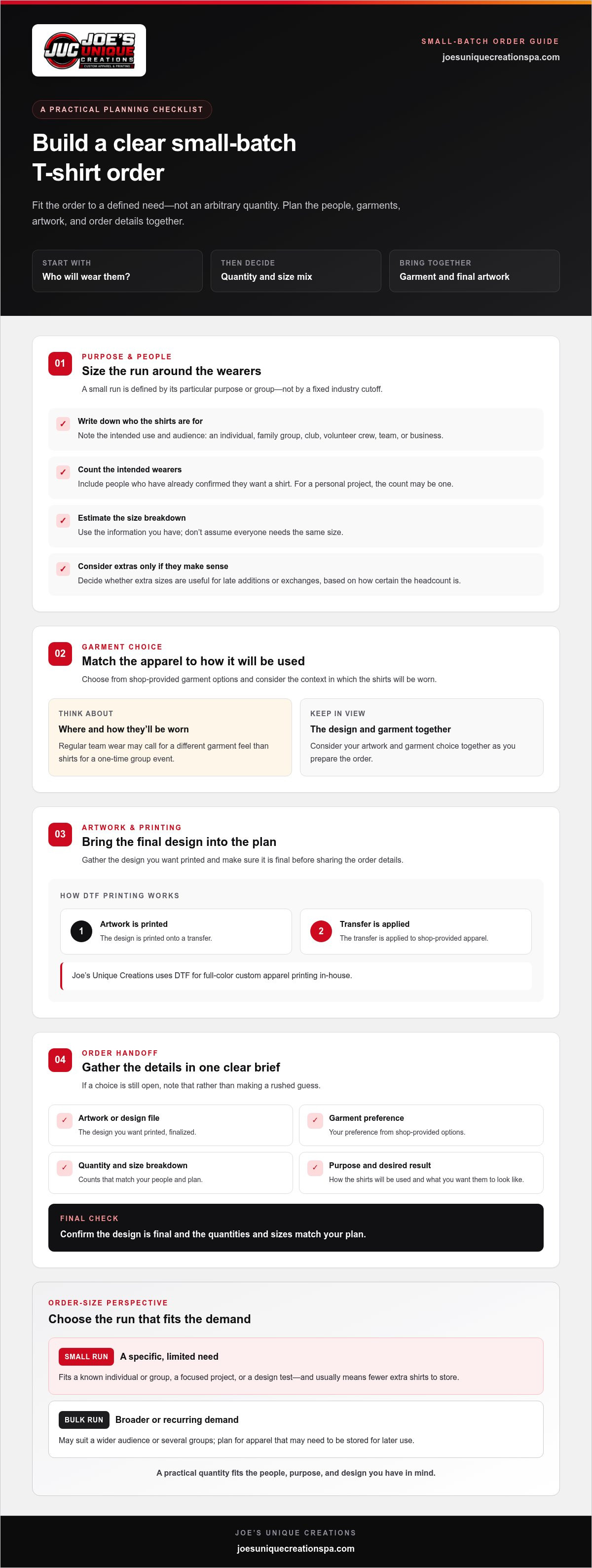
Here’s the basic sequence:
- Define the need. Note who the shirts are for and how they’ll be used.
- Select garments. Choose from the shop-provided apparel options that suit the purpose.
- Prepare artwork. Gather the design you want printed and make sure it’s final.
- Submit order details. Share the quantity, size breakdown, garment preference, and design.
These choices work together. Shirts for regular team wear may call for a different garment feel than shirts for a one-time group event. Think about where and how the shirts will be worn, then use that context to guide your garment and design choices.
What happens between choosing a design and printing shirts?
Joe’s Unique Creations prints custom apparel in-house using DTF, or direct-to-film, printing. The artwork is printed onto a transfer, then the transfer is applied to the apparel. DTF supports full-color custom printing, so your design and garment choice can be considered together as the order is prepared.
You don’t need to work out production settings yourself. Focus on the design, your garment preference, and the result you want. Clear details make for a more useful handoff without requiring you to learn printing terminology.
What details help make a small order clear?
A short, organized description makes it easier to explain your order. Include the purpose of the shirts and what you want the finished apparel to look like. Then gather the practical details below. If a choice is still open, note that rather than making a rushed guess.
- The artwork or design file you want printed
- Your garment preference from shop-provided options
- The total quantity and size breakdown
- A brief note about the intended use and desired result
Before submitting, check that the design is final and the quantities and sizes match your plan. You can explore custom T-shirt printing with Joe’s Unique Creations. Bring the key details together so the project has a clear starting point.
Small Batch vs. Bulk Custom T-Shirts: What Should You Compare?
The right order size depends on the job, not a standard cutoff. A small run fits a defined group or purpose. A larger run may make sense when more people are expected to wear the shirts or when apparel is needed on an ongoing basis. Compare these practical factors before settling on a quantity.
| What to compare | Small run | Bulk run |
|---|---|---|
| Quantity | Based on a specific, limited need | Based on broader or recurring demand |
| Audience | A known individual or group | A wider audience or several groups |
| Design readiness | Can suit a focused project or design test | Best planned once the design and use are settled |
| Storage needs | Usually fewer extra shirts to store | Needs room for apparel kept for later use |
When is a smaller shirt run the practical choice?
A smaller order can suit a personal project, a limited audience, or a group whose needs are clear. For example, a few staff members attending an event or a close-knit team may need matching apparel for a specific purpose. Base the count on confirmed wearers, then consider whether extra sizes are useful. This helps you avoid keeping shirts that may never be worn.
Design readiness matters, too. If you’re still deciding whether a graphic or message is right, keep the order tied to the people who need shirts now. Joe’s uses DTF printing for full-color custom apparel, so designs with multiple colors can be part of the project. Match the artwork to its intended use rather than increasing the quantity just because the design is ready.
When might a larger custom T-shirt run make more sense?
A larger run may be a better fit when you have a broader, known audience, several groups to outfit, or an ongoing need for branded apparel. For example, a business planning shirts for multiple teams can estimate who will receive them and how they’ll be used over time. A wider distribution plan can support a larger order when expected demand justifies the stock.
Before choosing a larger quantity, consider where the extra garments will go and whether the design is settled. If shirts are intended for future use, think through who will need them and how you’ll manage the remaining sizes. If the audience is uncertain, a more limited order may be easier to manage. Small batch custom T-shirts and bulk orders can both be sensible choices. Let the audience, design, and expected use guide your decision.
How to Prepare Your Small Batch Custom T-Shirt Order
A little planning makes a small order easier to describe and keeps the important choices together. Before submitting your order, write down who the shirts are for, how they’ll be used, and what you want the finished design to look like. Then gather the details below. You don’t need to know production terminology to explain your project clearly.
- Purpose: Note who will wear the shirts and where or how they’ll be used.
- Quantity: Count the people who need a shirt, and separate confirmed quantities from optional extras.
- Size breakdown: List the number of shirts needed in each size, not just the total.
- Garment preference: Choose an option from the shop-provided garments with the audience and intended use in mind.
- Artwork: Gather the design you want printed and note where you’d like it placed.
How should you plan quantity, sizes, and garment choice?
Build your size list from the people who’ll wear the shirts. If a group has confirmed its participants, record each person’s size instead of assuming everyone needs the same one. Keep possible extras in a separate note so it’s clear which shirts are definite and which are optional.
Think about the audience, setting, and intended use when selecting a garment from the shop-provided options. Shirts for regular team wear may have different needs from shirts for a one-time event. A clear purpose helps you choose a garment that fits how people will use it.
What should you prepare before sharing your artwork?
Gather the final design file and note its intended placement, such as the front or back. Check that it’s the version you want on every shirt before submitting the order. If you’re comparing versions, settle on one first. A final design helps prevent confusion about which artwork to use.
Keep your artwork notes simple: identify the file, describe the placement, and explain the result you want. Allow time for artwork review and production in your plans rather than assuming a turnaround. Clear notes help keep the request on track.
Before sending the order details, read them as if someone else had to make the shirts from your notes. Can they tell what the project is for, how many shirts are confirmed, which sizes are needed, what garment you prefer, and which design to use? If anything is unclear, add a short explanation. This quick review can make the next conversation more straightforward.
Once your list is together, you can talk through your T-shirt project with Joe’s. Clear notes are a helpful place to begin, whether your order is small or large.
Order Small Batch Custom T-Shirts with Joe’s Unique Creations
A small apparel order can be personal, practical, or part of a larger plan. Joe’s Unique Creations works with individuals, groups, teams, and companies on custom apparel, from a single item to larger print runs. Small batch custom T-shirts can be a fit when you need a focused quantity for a defined purpose.
Joe’s prints custom T-shirts and hoodies in-house using DTF, or direct-to-film, printing. The design is printed as a transfer and applied to a garment selected from shop-provided inventory. DTF supports full-color custom apparel, so artwork with multiple colors can be part of the project. You can focus on what you want the finished shirt to show and who will wear it, rather than managing the printing steps yourself.
What can customers expect from Joe’s custom apparel service?
The process starts with your project details. Whether you’re planning one shirt, apparel for a team, or a larger run for a business, explain the purpose and the result you want. That context helps connect the artwork and garment choice to the people who’ll wear it.
Garments come from shop-provided options, and printing is handled in-house. Bring your idea and the details you’ve worked out so far. If you’re deciding between design directions or garment preferences, describe what matters most for the project.
What is the next step for a small shirt order?
Gather the basics before sharing your project. These details help make your request clear and reduce guesswork about what you have in mind:
- Artwork: The final design file you want printed, plus any placement notes.
- Garment preference: The apparel option you have in mind from shop-provided inventory.
- Quantity: The total number of shirts or hoodies you’re planning to order.
- Size breakdown: The number needed in each size, based on the people who will wear them.
- Project purpose: A short description of the audience and intended use.
You can start with a simple idea and note any decisions that are still open. Review the artwork and size list so the project description reflects the version and quantities you intend to use. Share your custom T-shirt project with Joe’s, including the design, quantity, sizes, and purpose.
Take the Next Step with Your Shirt Idea
Your design doesn’t need to be a finished masterpiece before you begin. Start with what you want the shirts to do for the people who’ll wear them. A clear purpose gives your choices direction and helps turn an idea into a project you can act on.
Joe’s Unique Creations prints full-color apparel in-house using DTF. Custom T-shirts and hoodies are available for single items and larger runs, so your project can start at the scale that fits your need. Bring the design you have, the quantity you’re considering, and any questions about the garment or size mix.
Small batch custom T-shirts are a practical way to make something personal without ordering more than your project calls for. Start with the details you’ve gathered and a clear idea of what you want the shirts to do.
Share your small-batch T-shirt project with Joe’s and take the first step toward a shirt made for your purpose.
Frequently Asked Questions
Can I order a single custom T-shirt?
Yes, Joe’s makes custom apparel for single items as well as larger print runs. One shirt can suit a personal design, a sample for an individual project, or a gift. Before getting started, gather the artwork you want printed and note your garment preference from shop-provided inventory. A clear idea of the shirt’s purpose helps keep the project focused.
What does “small batch” mean for custom T-shirts?
“Small batch” doesn’t have one fixed quantity that every printer uses. It generally means a limited run planned for a defined need, such as shirts for one club’s volunteers rather than an entire organization. To choose a sensible order size, count the people who expect to wear a shirt, then consider whether extra sizes are useful. That gives you a practical starting point for small batch custom T-shirts.
Can I use my own shirts for custom printing?
No. Joe’s prints custom apparel on garments supplied from its own inventory, so customers don’t bring their own shirts for printing. Prepare the design you want to use, your preferred garment option, and a size breakdown for the people who’ll wear the shirts. Sharing those details gives the project a clear starting point.
Can I include different shirt sizes in a small order?
Yes, you can plan a group order with different sizes. List each requested size and how many shirts you need in it. If you’re organizing for others, collect sizes from the people who’ll wear the shirts rather than guessing. For example, a team organizer can record each person’s requested size and total the list.
What artwork file should I prepare for custom T-shirts?
Start with clear, high-quality artwork and gather the original design file if you have it. A small screenshot may lose detail and can be harder to work from than the original. The right file requirements depend on the design, so avoid changing or shrinking the artwork without a reason. A dedicated artwork-preparation guide can help you get the file ready once it’s published.
How should I wash a custom printed T-shirt?
Follow the care instructions on the garment’s label first, since that guidance is specific to the shirt. As a cautious general practice, turn the T-shirt inside out before washing to help protect the printed surface from rubbing against other items. Don’t assume every garment should be washed the same way. If the care label gives different directions, follow those directions.
Can small batch custom T-shirts have full-color designs?
Yes. Joe’s uses DTF printing for full-color custom apparel, which can suit designs with multiple colors and detailed artwork. Before sharing your project, settle on the final design and note where you’d like it placed, such as the front or back of the shirt. Those details help explain how you want the finished garment to look without needing to describe printing technicalities.
