
The best custom shirts for small business aren’t necessarily the fanciest ones. They’re the ones your team will actually wear. Shirts for daily work have a different purpose than apparel for a trade show, customer giveaway, or retail shelf. Start by deciding how the shirts will be used, then choose the garment and design to match.
Before ordering, settle a few practical details: shirt style, print method, sizes, quantity, and artwork. A logo that looks sharp on a screen may be hard to read when printed small or placed on a particular garment color. Planning those details first can help you avoid common order mix-ups.
This guide explains how to match shirts to your team and business purpose, prepare artwork for full-color DTF printing, and estimate quantities with less sizing guesswork. Joe’s Unique Creations prints custom T-shirts and apparel in-house using shop-provided garments, including full-color designs on T-shirts and hoodies. Use the checklist below to prepare a clear order that fits the way your business works.
Key Takeaways
- Start with the job your shirts need to do, such as outfitting staff, meeting customers, supporting an event, or selling branded merchandise.
- Choose custom shirts for small business by matching the garment and design to how your team or customers will wear them.
- Consider DTF printing for artwork with multiple colors or fine detail.
- Before ordering, prepare your logo, placement, garment color, size breakdown, quantity, and timing.
- Joe’s Unique Creations produces custom apparel in-house with DTF printing on shop-provided garments.
Why custom shirts can work hard for a small business
Small-business apparel should earn its place. It needs to suit the people wearing it, fit its purpose, and make the business easy to recognize. A thoughtful order of custom shirts for small business can help staff look coordinated, make event teams easier to identify, or give customers merchandise they choose to wear. Begin with the shirt’s job, not just its color or print.
Custom business shirts are garments printed with a company’s branding for staff, events, customers, or sale. The same logo can serve different purposes, but the garment, placement, and overall design may need to change. A clear logo and a consistent garment choice give your team a recognizable look without asking the shirt to communicate too much.
What should your business shirts do?
Think about where the shirts will be worn and what people need to notice. Everyday staff wear should suit the workday and keep the logo visible. Customer-facing apparel should fit the setting, whether employees work behind a counter or meet customers elsewhere. Event shirts should make it easy to distinguish staff from guests. Giveaways and merchandise have different roles: one is handed out as a promotion, while the other is selected and kept as a branded item.
Match the design to that purpose. A small chest logo can create a tidy, understated look for staff. A larger design may be more noticeable when event staff need to be identified across a busy room. For merchandise, consider whether the artwork will appeal outside a business setting. Keep the logo readable and choose a garment color that gives it enough contrast.
Which small businesses benefit from branded shirts?
A service team can wear matching shirts while working at a customer’s home or business. Shop staff can use a shared look that helps customers identify who can assist them. A brand can offer shirts as merchandise, and a pop-up business can use event apparel to make its crew easier to spot. These are practical uses, not promises of sales or recognition. Matching apparel gives a team a coordinated appearance and a consistent way to display its name.
Keep the plan manageable. If employees will wear shirts often, choose a design they’ll be comfortable wearing and a look that suits the work. For a one-time event, make the event role or business name easy to notice. If the artwork uses several colors or fine detail, direct-to-film printing is one method for transferring detailed designs onto garments. Start by deciding who will wear the shirt, where they’ll wear it, and what you want people to see.
How to choose custom shirts for your business and team
A good shirt choice starts with the people who will wear it and the setting where they’ll wear it. Look beyond the product photo. Apparel for active work may need to feel different from a shirt worn at a counter or offered as merchandise. When choosing custom shirts for small business, consider fit, color, expected wear, and design together rather than deciding on each detail in isolation.
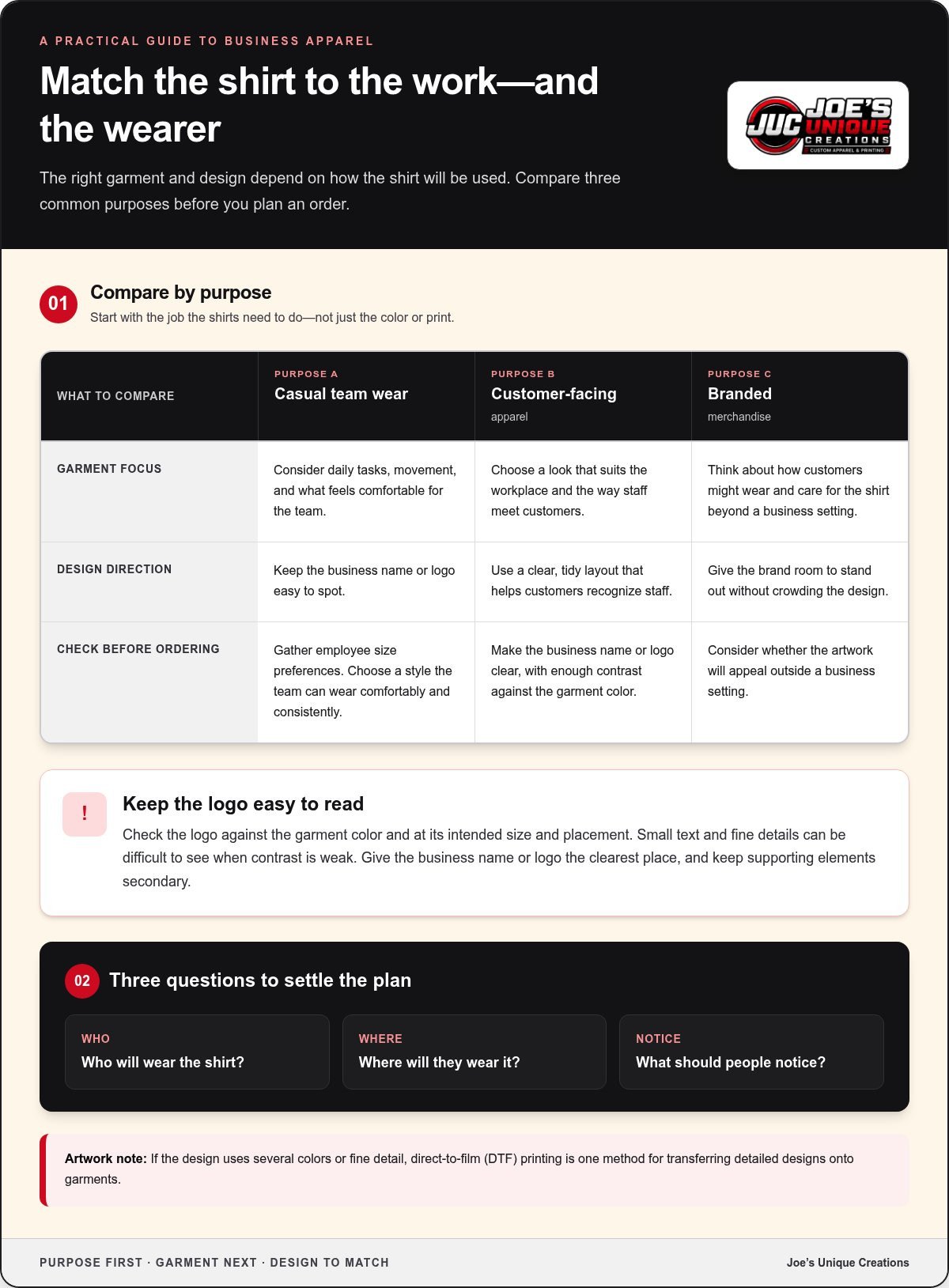
| Purpose | Garment considerations | Design direction |
|---|---|---|
| Casual team wear | Consider daily tasks, movement, and what feels comfortable for the team. | Keep the business name or logo easy to spot. |
| Customer-facing apparel | Choose a look that suits the workplace and the way staff meet customers. | Use a clear, tidy layout that helps customers recognize staff. |
| Branded merchandise | Think about how customers might wear and care for the shirt beyond a business setting. | Give the brand room to stand out without crowding the design. |
Match the shirt to the work and the wearer
Picture a typical workday. Will employees move around, work indoors, meet customers, or attend events? The answers help narrow the garment choice and the level of formality. Choose a style the team can wear comfortably and consistently, not just one that looks good in a mock-up. Before placing a group order, gather size preferences from employees and use them to build a size breakdown.
Fit is personal, so don’t rely on a size label alone. Review garment measurements and fit notes before settling on a style. The custom T-shirt printing guide explains more about fit and quality. If staff will wear the shirts often, comfort deserves as much attention as appearance.
Choose colors and branding that stay easy to recognize
Start with the colors already used in your logo and other business materials. A consistent palette helps keep the shirts aligned with your brand. Then check how the logo reads against the garment color. Small text and fine details can be difficult to see when contrast is weak, so favor a clear design that remains legible at the intended size and placement.
Avoid squeezing every message, graphic, and contact detail onto one shirt. Give the business name or logo the clearest place in the design, and keep supporting elements secondary. The SBA marketing and sales guide offers broader guidance on building a consistent brand identity. Joe’s Unique Creations prints custom apparel in-house using DTF printing on shop-provided garments, with full-color designs available on T-shirts and hoodies. Review custom apparel options while planning a shirt that suits your team.
Is DTF printing a good fit for small-business shirts?
The right print method depends on what your artwork needs to show. Full-color printing can reproduce designs with several colors, gradients, or fine detail. Direct-to-film (DTF) printing is one option for custom shirts for small business when you want the design to reflect more than a few basic shapes or colors.
Joe’s Unique Creations prints apparel using DTF. The process is handled in-house on shop-provided garments, with full-color designs available on T-shirts and hoodies. DTF is different from embroidery and screen printing, which are separate apparel decoration methods.
What does DTF printing mean for your design?
DTF stands for direct-to-film. The design is printed onto a special film, then transferred from the film onto a garment using heat. The film acts as an intermediate surface, so the artwork can be prepared before it is applied to the shirt. For a general overview of the process, see this guide to DTF printing.
This approach can suit artwork with multiple colors or fine elements. A logo with colored lettering, a small illustration, or a detailed graphic may need more than a one-color treatment. DTF makes full-color designs available on T-shirts and hoodies, allowing the artwork to retain the color combinations and details that help it represent your business. The result depends on the artwork file and how the design is prepared, so start with a clean, clear logo file.
DTF printing places a printed design onto film, then transfers that design onto a garment with heat. This describes the method without suggesting that every design or garment will look identical.
When should you consider a different customization method?
Consider the finish you want before choosing a method. Embroidery creates a stitched design, while screen printing applies ink through a screen. Both differ from DTF, which transfers printed artwork from film. Joe’s Unique Creations provides DTF printing, not embroidery or screen printing.
For a small-business logo, consider what the artwork needs to show. Does it rely on several colors or fine detail? Do you want a printed design, or would you prefer the look of stitching? Weigh those questions alongside the garment and how the shirt will be used. There’s no need to add detail just because you can. A simpler logo can be easier to recognize, while a more involved design may benefit from full-color printing. Choose artwork that fits your brand and prepare the file so it can be reproduced clearly.
Plan artwork, sizes, quantity, and timing before ordering
A short planning pass can prevent common order mix-ups. Before ordering custom shirts for small business, gather the artwork, placement, garment colors, sizes, quantity, and date you need the shirts. Work through the checklist in order so each choice is ready for the next.
- Gather the latest artwork. Use the current logo or approved design file, not an old version pulled from an email or social post. A clear, high-quality original gives the print a better starting point. If the artwork includes a background, small lettering, or fine detail, note that when preparing the order so the design can be reviewed at its intended size.
- Choose the print placement. Decide whether the design belongs on the front, back, or another part of the shirt. Consider its size and what people should notice first. A logo that looks clear on a computer screen may feel crowded when reduced, so preview it at a realistic size. Joe’s small-batch custom T-shirt planning guide can help you think through the details of a modest order.
- Set the garment color. Compare the logo with the shirt color before finalizing the design. Strong contrast can help the business name and artwork remain easy to read. Check that the selected color suits the team and setting, too. Record the color clearly rather than relying on a verbal description.
- Build a size breakdown. Gather size preferences from the people who will wear the shirts, then list the number needed in each size. If the order uses more than one garment color, include the color with each size count. A clear breakdown helps reduce guesswork and makes it easier to spot a missing size before production begins.
- Set quantity and timing around the real need. Estimate shirts for current staff, a planned event, or a specific distribution. Avoid ordering extras only because you assume a bigger order will cost less. Unsold shirts take up space and may not fit future needs. Work backward from your deadline and leave time to review the design and order details. Same-day printing is available for qualifying orders using select in-stock garments, but it isn’t guaranteed for every order.
Before submitting, read the full order summary once more. Check the artwork, placement, garment color, size counts, total quantity, and needed date together. Use your completed checklist to start your custom shirt order.
Order custom small-business shirts with Joe's Unique Creations
Once you know what the shirts are for and have a clear order plan, the next step is bringing the design to life. Joe’s Unique Creations produces custom apparel in-house using DTF printing on garments supplied by the shop. The service supports both single items and larger print runs, so you can plan around the size of your team or project.
What to expect when ordering from Joe's
Bring the key order details together before getting started. Have your garment choice, artwork, colors, quantities, and needed timing ready to discuss. Joe’s prints designs onto shop-provided apparel, so include garment selection as part of the order rather than planning to bring in your own shirts.
Joe’s uses DTF printing for custom apparel, including full-color designs on T-shirts and hoodies. This method suits business artwork that includes several colors or fine detail. The apparel is printed in-house, bringing the planned design and finished shirts together in one order.
Clear expectations matter when you’re organizing shirts for a work date or event. Share the date you need them and the order details early in the process. Production and delivery timing can depend on the order, so don’t plan around an assumed turnaround. Same-day printing is available for qualifying orders using select in-stock garments, but it isn’t guaranteed for every order. Build your schedule around the timing you need, not an assumption that every order qualifies for same-day service.
Choose a practical next step for your business
You don’t need a complicated plan to begin. Start with the project size: a few shirts for current staff, apparel for an upcoming event, or a larger run for business use. Then bring your prepared details together so the order has a clear purpose and scope. Joe’s works with individual and commercial customers, including single-item orders and larger print runs.
If the design is ready, use the details you’ve gathered to move forward. If it still needs work, settle the artwork and quantity before starting. A clear plan makes it easier to order shirts that fit the way your business operates. For urgent needs, qualifying same-day printing may be available when select in-stock garments suit the project, though it isn’t guaranteed.
When your plan is ready, start your custom shirt order with Joe’s Unique Creations.
Take the next step with confidence
Your first apparel order doesn’t have to answer every future question. Treat it as a practical starting point. Notice which shirts your team reaches for, what customers ask about, and whether the design works in daily use. Those observations can guide your next order and help your branded apparel grow alongside the business.
When you’re ready to move from an idea to custom shirts for small business, involve the people who’ll wear them and make choices that suit the work. A clear purpose and a thoughtful design are a solid place to begin. You can plan custom shirts for your business with Joe’s Unique Creations.
Take it one step at a time. A plan that fits your team helps you choose apparel your people feel good wearing and your business feels proud to share.
Frequently Asked Questions
Can a small business order just a few custom shirts?
Yes. Joe’s Unique Creations handles single items as well as larger print runs, so you can order for a small team or a specific need. A few shirts may suit a new employee, a replacement, or a small event crew. Base the quantity on who needs a shirt now, and start with a practical batch for your business.
What is the best print method for a small-business logo?
It depends on the design and the look you want. Joe’s uses DTF printing, which supports full-color artwork, layered colors, and fine detail. For a simple logo, consider whether a printed design on apparel gives you the look you want. Review the logo at its intended size and choose artwork that stays clear and recognizable on the garment.
Can I provide my own shirts for custom printing?
No. Joe’s Unique Creations prints on garments supplied by the shop, so customer-provided shirts aren’t used for custom printing. Plan garment selection as part of the order instead of buying shirts separately. That way, the apparel and printing are handled together for the project.
How should a business choose shirt sizes for its team?
Ask each wearer which size they prefer, and use garment measurements rather than relying on size labels alone. Labels can fit differently across garments, so compare the measurements with a shirt the employee already likes. For a shared order, keep a simple count by size and note individual preferences. This gives you a clear breakdown before submitting the order.
Can custom shirts be printed with a full-color logo?
Yes. Joe’s offers full-color custom designs on T-shirts and hoodies using DTF printing. A multicolor logo, illustration, or graphic can be printed without simplifying it to a single color. For a clearer result, use an original artwork file instead of a small screenshot. Check that small lettering and fine details remain readable at the planned print size.
Does Joe’s Unique Creations offer same-day custom shirt printing?
Same-day printing is available for qualifying orders using select in-stock garments. It isn’t guaranteed for every order, so don’t treat it as a set delivery promise. If you have a firm event or work date, include it in your plan and leave time for the order details to be prepared. The same-day option depends on the order and garment.
What artwork should I prepare for custom business shirts?
Start with the latest, cleanest version of your logo or design. Vector files such as AI, EPS, or SVG are useful, and a transparent PNG can work for raster artwork. As a general preparation guide, aim for 300 DPI at the final print size, based on DTF Transfers Direct’s artwork checklist. Avoid a tiny social-media image, since enlarging it can make the design less clear.


